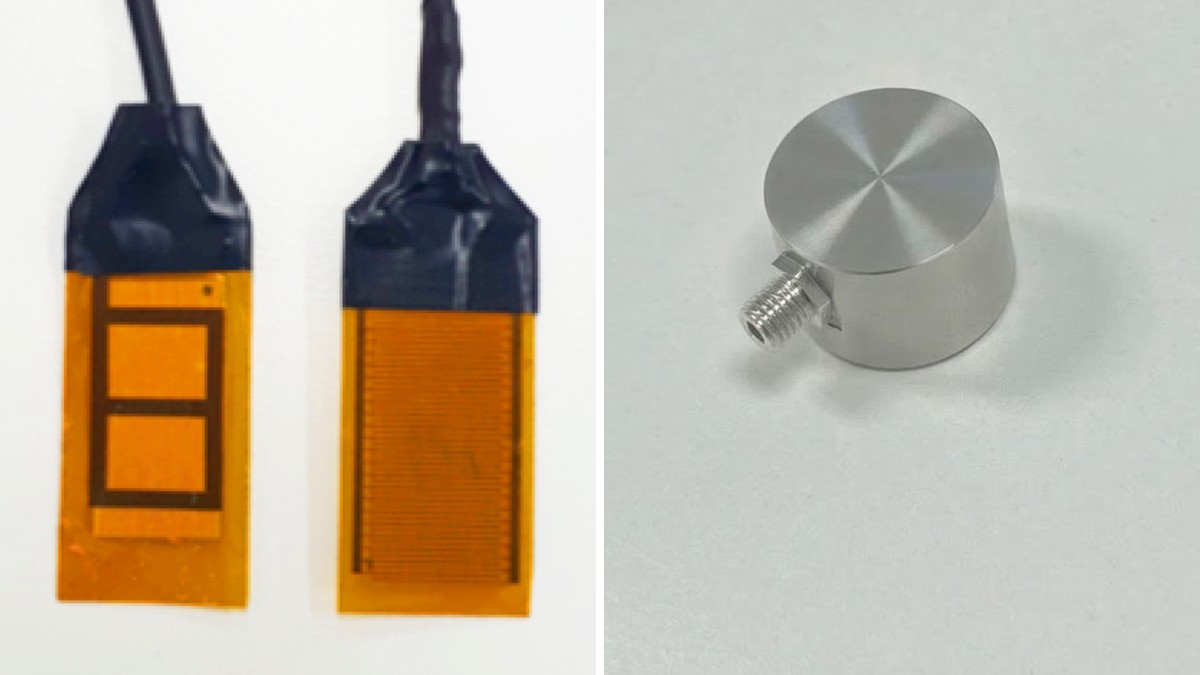
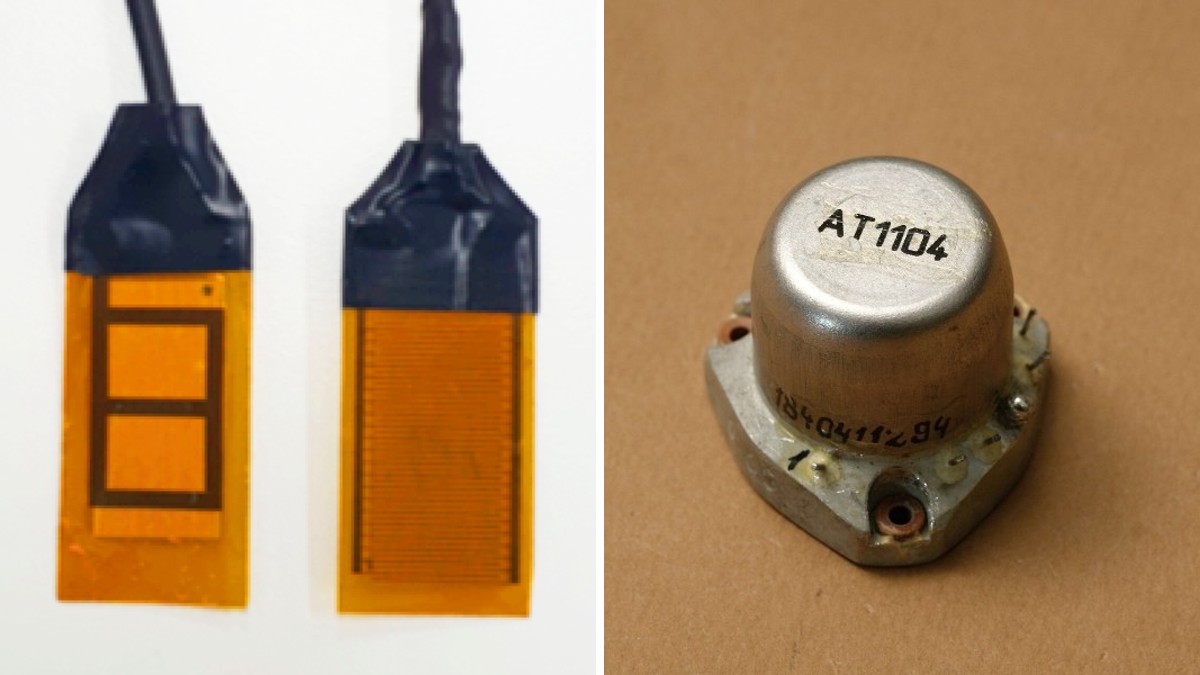
- When fluid escapes through a narrow opening in a pressurized pipe, it produces a continuous AE signal.
- Sensors mounted on the pipe surface can monitor for leaks continuously during operation, and with two or more sensors the leak can also be located.
- Sensitivity depends on sensor spacing, background noise, pressure and leak type, and AE alone does not measure the exact leak rate.
Pipeline leaks are hard to find early with walk-around inspections or gas detectors alone. This article explains how AE sensors detect pipeline leaks and what to consider when applying them.
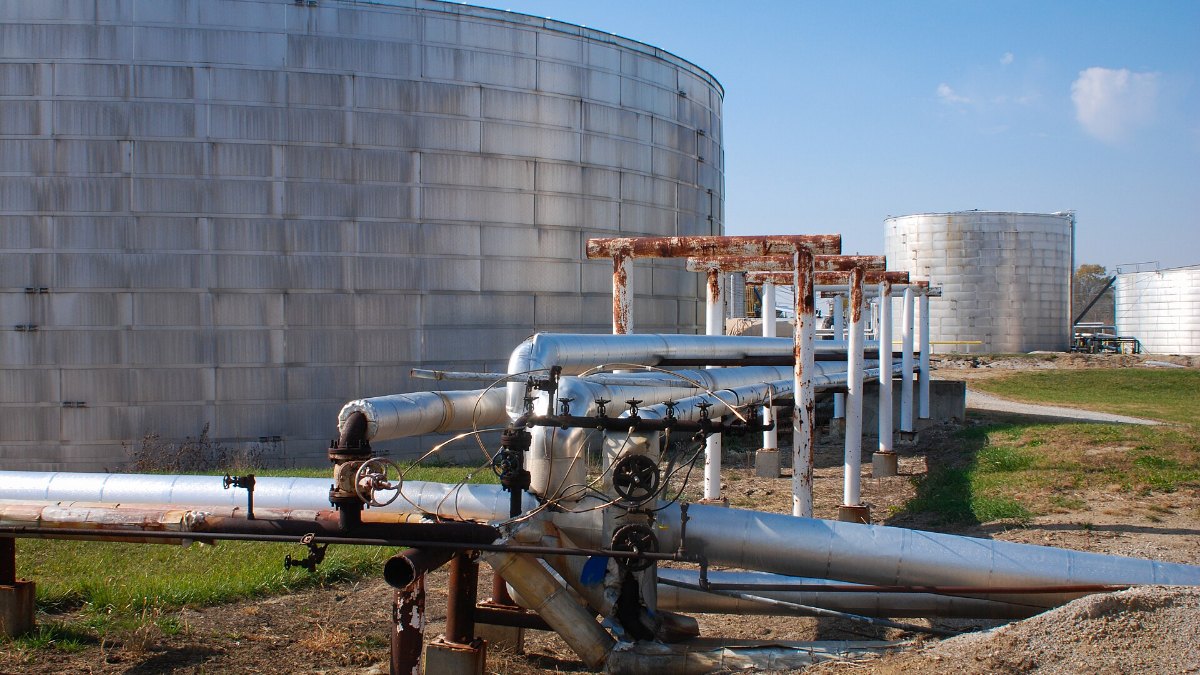
Why does a leak produce an AE signal?
When there is a pressure difference across the pipe wall and fluid escapes through a crack, pinhole or valve-seat gap, it creates fast flow and turbulence. This flow keeps striking the pipe wall, generating elastic waves that travel along the pipe. An AE sensor on the surface can detect these signals even from a distance.
Signals from a growing crack are short, strong burst-type signals, whereas leaks produce continuous signals that never stop. Leak monitoring therefore focuses on changes in average signal level (RMS) or energy in specific frequency bands rather than individual pulses.
Comparison with conventional leak detection
| Method | Principle | Limitations |
|---|---|---|
| Walk-around inspection | Operators check with gas detectors or listening devices | Misses leaks between inspections; hard to access elevated or confined sections |
| Pressure · flow monitoring | Checks pressure drop or inlet/outlet flow difference | Responds mainly to large leaks; hard to locate |
| Gas detectors | Measure the concentration of leaked gas | Detect only after the gas has spread; affected by wind and ventilation |
| AE monitoring | Detects elastic waves generated by the leak on the pipe surface | Requires noise handling and sensor layout design; leak rate quantification needs a separate method |
The biggest difference of AE is that it picks up the signal directly from the pipe, before the fluid spreads outside. Sections that are unattended or hard to access can be monitored continuously.
How is the leak located?
With sensors at both ends of a section, the signal reaches the sensor closer to the leak first. Knowing the arrival time difference between the two sensors and the wave speed in the pipe, the distance to the leak can be calculated. Because continuous leak signals have no clear onset, in practice the time difference is often obtained by cross-correlating the two signals.
Factors that affect sensitivity
The international standard ASTM E1211 also states that the sensitivity of AE leak detection depends on sensor spacing, background noise, system pressure and leak type. It notes that choosing an appropriate frequency band reduces background noise and increases sensitivity to leak signals, and that at low frequencies below about 100 kHz a leak can excite structural resonances that amplify the signal.
- Pressure: The larger the pressure difference, the stronger the signal.
- Sensor spacing: The farther apart, the more the signal attenuates and the easier it is to miss small leaks.
- Background noise: Must be distinguished from pumps, valve operation and normal flow noise.
- Pipe conditions: Material, wall thickness, insulation, supports and branches affect signal transmission.
Because normal operating noise differs at every site, it is effective to learn the normal signal pattern first and then look for deviations from it. Recent research actively explores statistical comparison of AE feature distributions and AI-based classification.[2]
Well-suited equipment
- Elevated and rack piping that is hard to inspect frequently
- High-pressure gas and steam lines and valves
- Storage tank floors, heat exchanger tubes
- Petrochemical and fine chemical processes where leaks have major safety and environmental impact
Related standards
- ASTM E1211: Standard practice for leak detection and location using surface-mounted AE sensors. Applies to continuous monitoring of pipes and pressure vessels and to hydrostatic test monitoring.
- ISO 18081: General principles of leak detection using AE testing
- ASTM E1139: Practice for continuous AE monitoring of metal pressure boundaries in service (pressure vessels, piping, etc.)
Interested in continuous leak monitoring for your pipelines?
Tell us about your piping layout and operating conditions, and we will propose a sensor layout and monitoring plan.
Contact usView use cases[1] ASTM E1211/E1211M, Standard Practice for Leak Detection and Location Using Surface-Mounted Acoustic Emission Sensors.
[2] A Novel Pipeline Leak Detection Technique Based on Acoustic Emission Features and Two-Sample Kolmogorov–Smirnov Test. Sensors, 21(24), 8247 (2021).