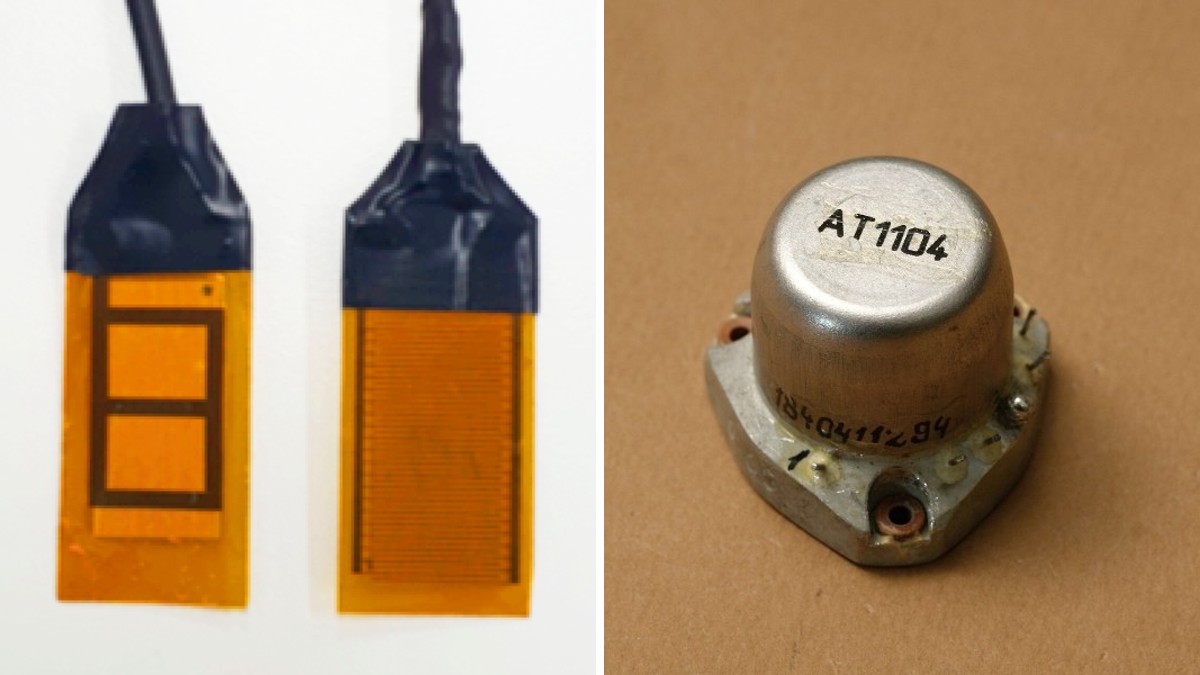
- AE sensors detect the high-frequency elastic waves released by a material at the moment of cracking, leakage or friction.
- They listen passively to the signals produced by defects instead of emitting a signal, so equipment can be monitored continuously while it runs.
- They are used for early damage detection on pipelines, pressure vessels, rotating machinery, manufacturing processes and more.
An AE (acoustic emission) sensor detects cracks, leaks and friction developing inside equipment while it is in operation. This article summarizes how AE sensors work, their main applications and what to check when selecting one.
What is an AE sensor?
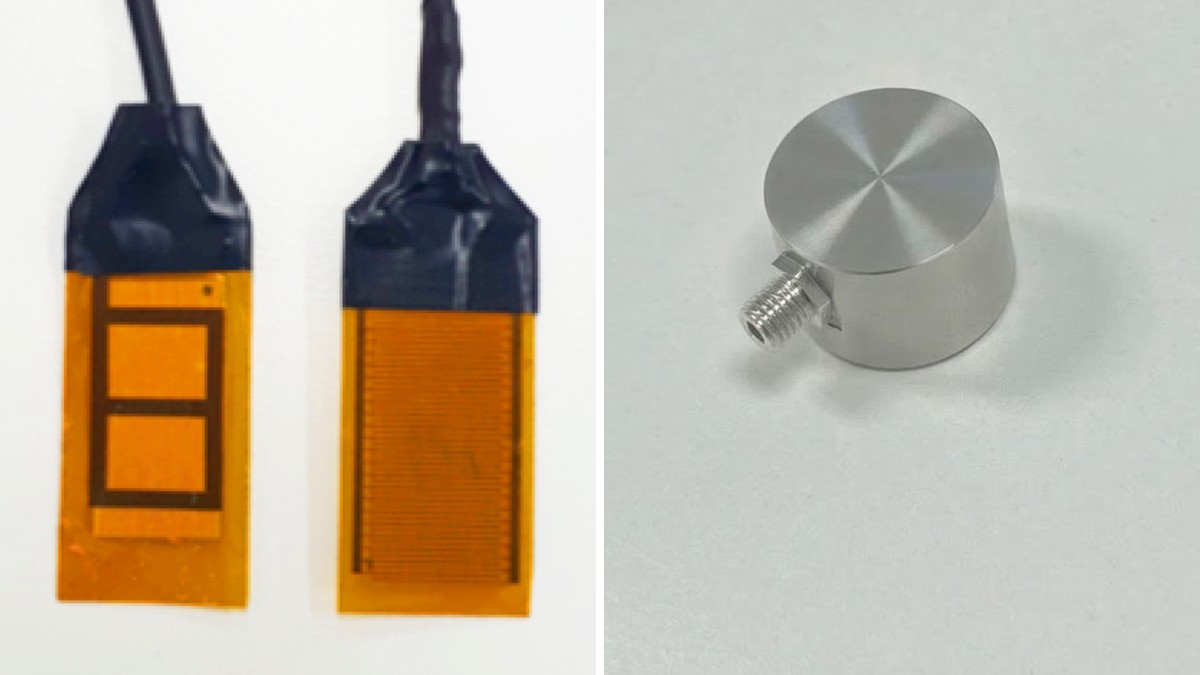
An AE sensor detects acoustic emission (AE) signals generated inside a material. When a crack forms or grows in a metal structure, when fluid escapes from a pipe, or when parts rub against each other abnormally, energy stored in the material is released in a very short time and creates high-frequency elastic waves. The AE sensor converts these tiny vibrations into an electrical signal.
These signals lie in a frequency range humans cannot hear (typically several tens of kHz to about 1 MHz), so ordinary microphones or vibration sensors have difficulty capturing them.
How does an AE sensor work?
Most AE sensors use a piezoelectric element to convert the elastic waves reaching the surface into a voltage signal. The signal is amplified, features such as amplitude, energy and event rate are extracted, and their trends are used to judge whether something is wrong. Because the sensor does not emit anything but listens to the signals produced by defects — a passive method — equipment can be monitored continuously without stopping it.
Where are AE sensors used?
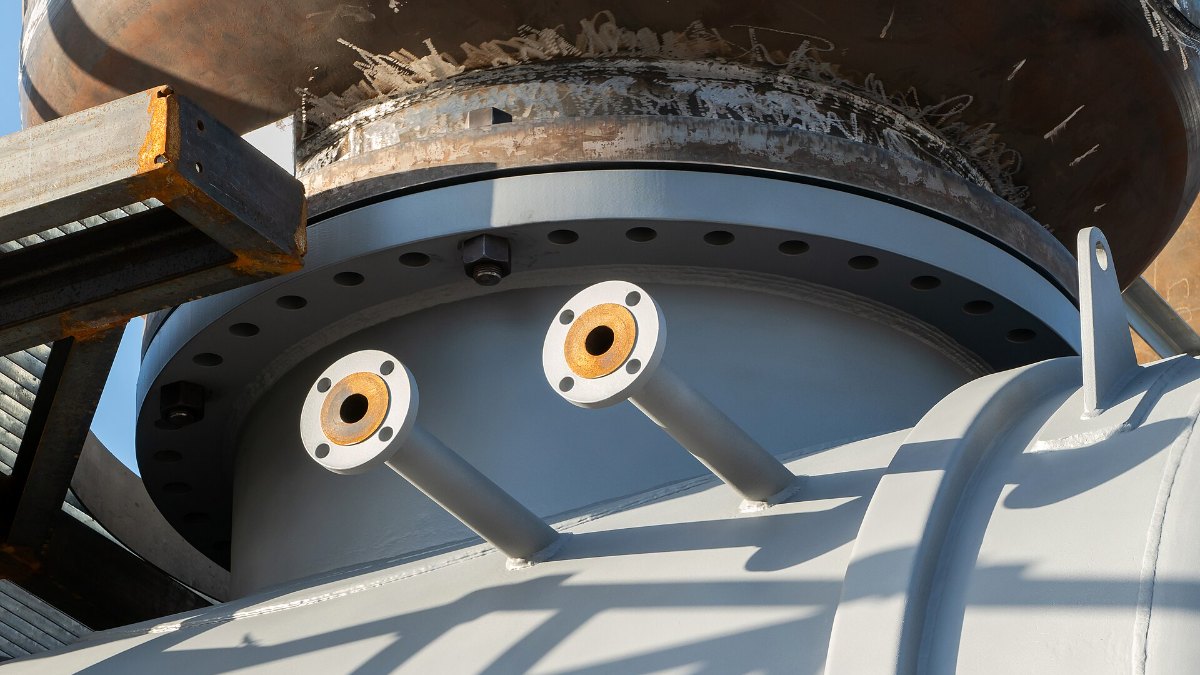
Continuous monitoring of leaks and damage in hard-to-reach places such as elevated piping.
Detects the initiation and growth of cracks during operation.
Finds early damage and poor lubrication in motors, gears and bearings.
Checks micro-defects occurring during forming and machining in real time.
Diagnoses potential abnormalities inside batteries.
How AE detects motor, gear and bearing faults →
How AE detects pipeline leaks →
AE application cases by industry →
Which AE sensor should you choose?
You need to consider the frequency band that matches the phenomenon you want to detect, the curvature of the mounting surface, the installation environment such as temperature and explosion protection, the sensor spacing given signal attenuation, and the data processing used to filter noise and judge anomalies. On curved pipes in particular, how well the sensor adheres to the surface largely determines signal quality.
Rina Solution’s AE sensor solution
Rina Solution provides an AE-based equipment anomaly detection solution that connects sensing, analysis and monitoring in one system.
A flexible acoustic emission sensor designed to adhere to curved pipes and equipment surfaces. Explosion-proof certified.
Analyzes AE signal features to detect early-stage defects precisely.
Visualizes collected data in real time and sends alerts when an anomaly occurs.
- AE Waveform and FFT Analysis: Reading AE Signals in the Time and Frequency Domains
- AE Sensor vs Vibration Sensor: Differences and When to Use Both
- AE Sensor Selection Guide: Checklist by Frequency, Form and Environment
- How AE Detects Pipeline Leaks
- How AE Detects Cracks and Damage in Equipment
- How AE Detects Motor, Gear and Bearing Faults
- AE Sensor Application Cases by Industry
- How to Separate Real AE Signals from Field Noise
- AE Signal Parameters Explained: Hit, Amplitude, Counts, Energy, RMS
Wondering whether AE sensors can work on your equipment?
Tell us about your equipment and operating conditions, and we will recommend a suitable sensor configuration and approach.
Contact usView use cases